


Duties with RSB
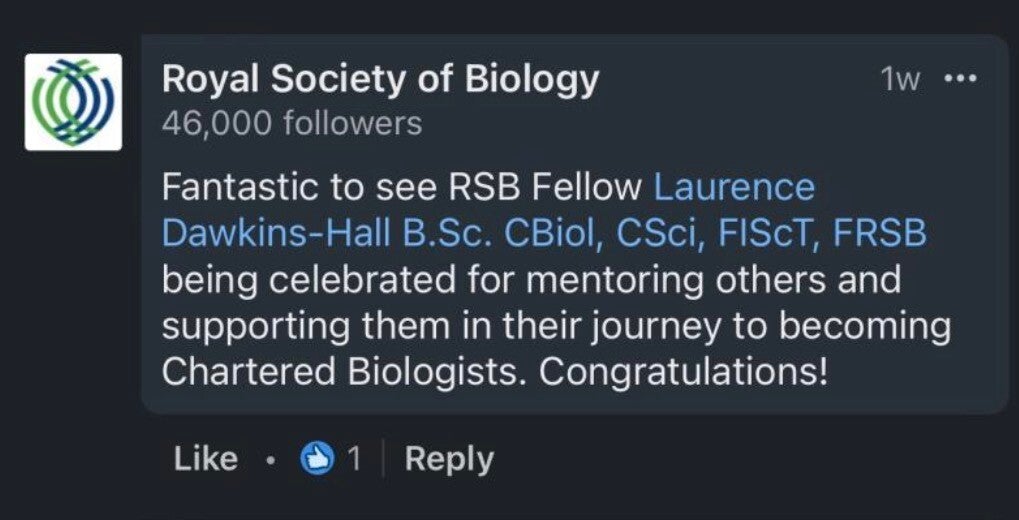
From 2019 until 2025, I assisted the executive of the RSB with mentoring duties pertaining to the vocational awards of Chartered Scientist (CSci) and Chartered Biologist (CBiol). Holding both awards with the RSB themselves, in particular:
- I acted as an assessor for both awards.
- I assisted with training new assessors.
- I contributed to the official, on line CBiol guide.
- In 2025, I designed and recorded a series of instructional webinars or vignettes which constituted an official on line on demand course, which is now part of the RSB cache of self taught courses, associated with the RSB “My Learning” materials. As shown in you tube recordings of these vignettes (below), these modules cover all aspects of applying for and retaining CBiol post nominals. In addition, there are specific modules devoted to eligibility criteria for applying, the benefits of becoming CBiol and comparing and contrasting CBiol with CSci for life scientists.

My work with the Royal Society of Biology (RSB)
I have worked with the RSB in the context of Chartered Scientist (CSci) and Chartered Biologist (CBiol). In particular I have assessed for both registers and likewise trained new RSB assessors. As detailed in RSB materials from the main menu I have also designed and recorded an online course for the RSB web site which mentors prospective candidates in all aspects of applying for and thence retaining CBiol.

The Award of Chartered Biologist (CBiol)
In this section below I provide summative detail of my activities with the RSB. More detail can be found in the dedicated drop down menu at the top.
The Road to Chartership
Below is a breakdown of how to become a Chartered Biologist (CBiol) and the benefits thereof. These themes are expanded in the modules or vignettes associated with the RSB on line course and the respective modules for this course are provided as you tube videos at the bottom of this page.

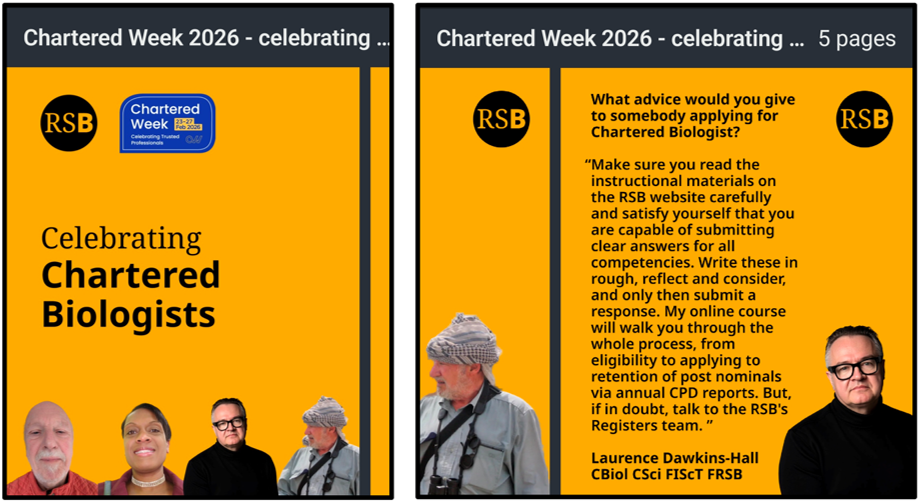

Describing in print what it means to be a Chartered Biologist
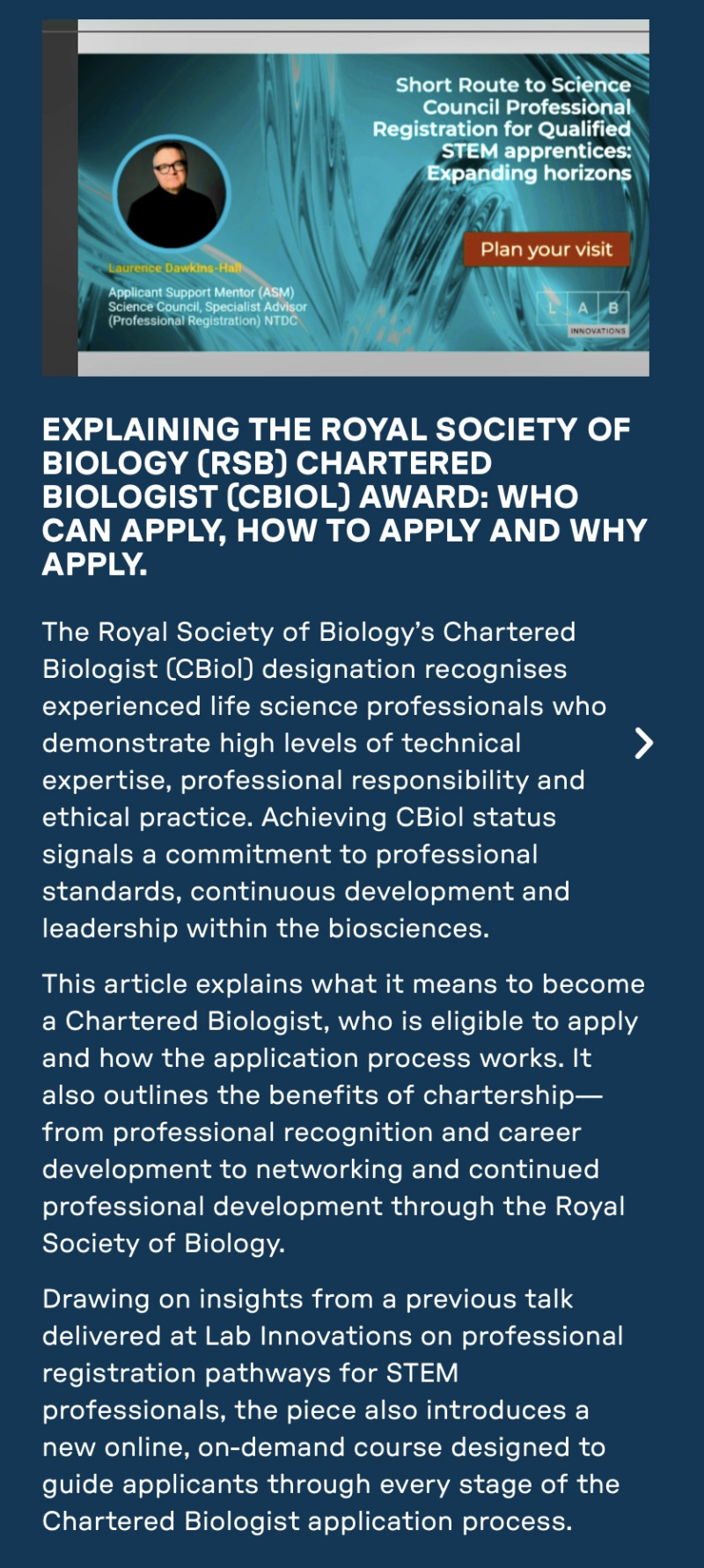
I have published one principal article on the why and how to become a Chartered Biologist in Laboratory News and a Lab Innovations blog.

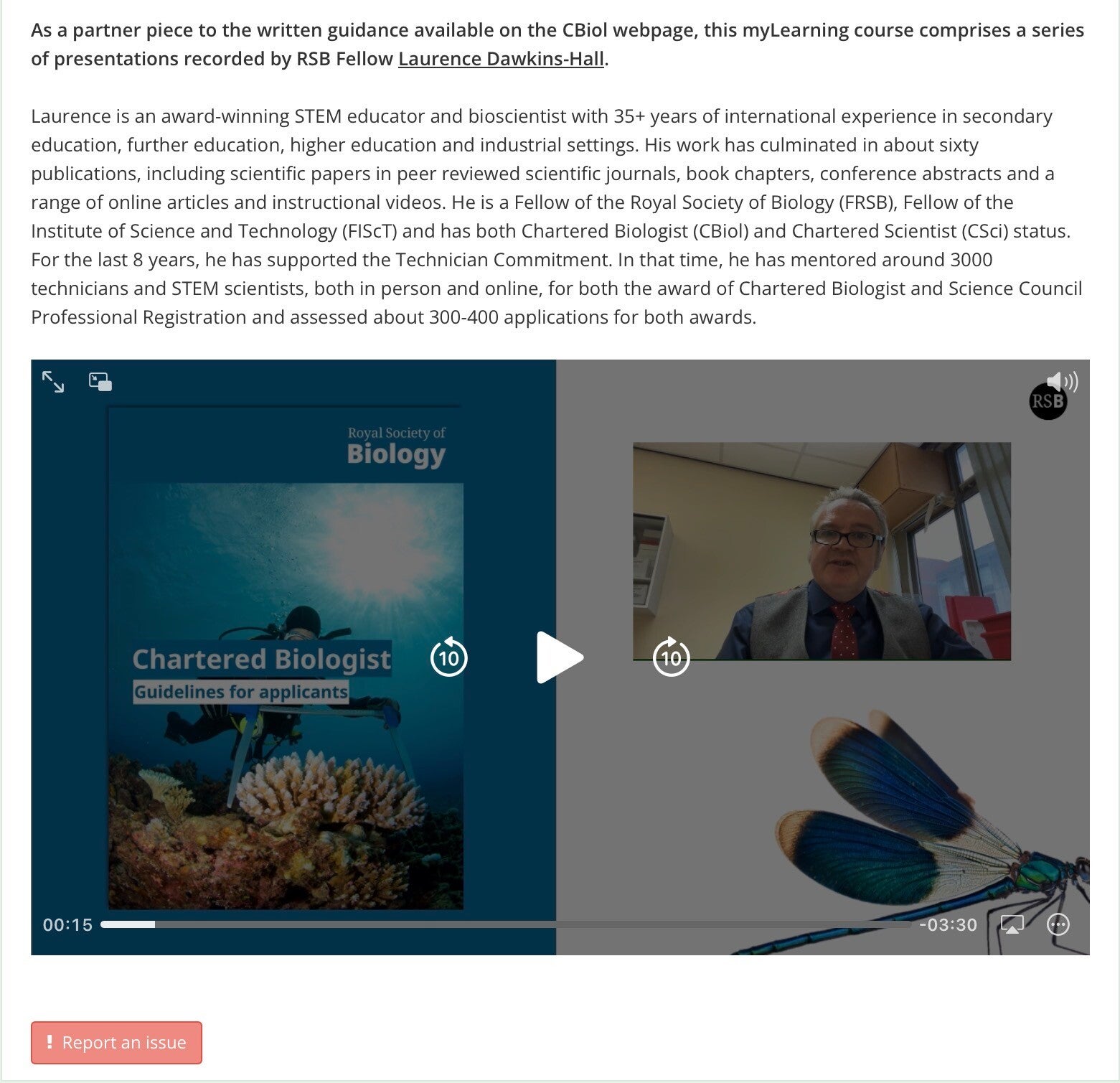


Online on Demand course Course for Chartered Biologist (CBiol)
The online on demand CBiol webinar course consists of discrete power point webinars or modules which cover all aspects of applying for, obtaining and retaining Chartered post nominals (CBiol).
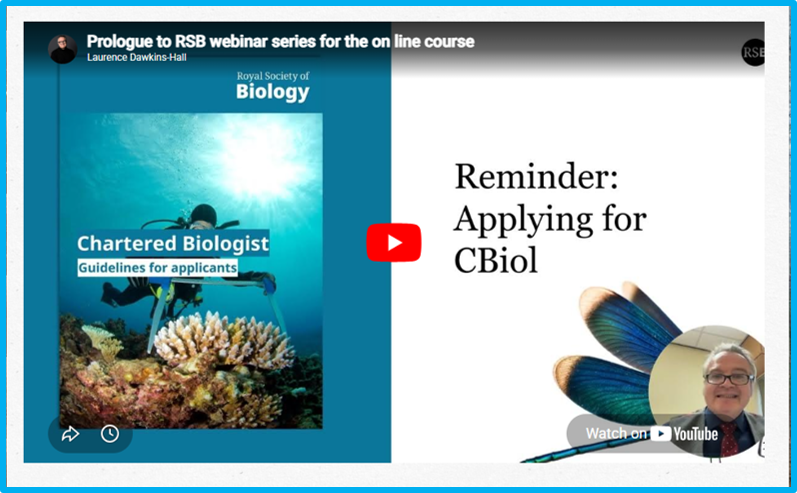
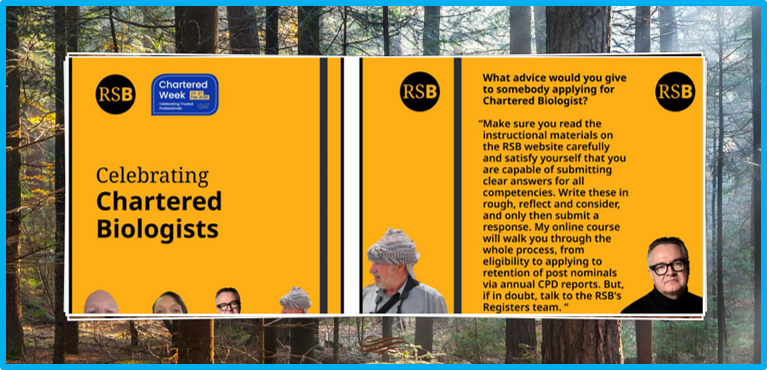
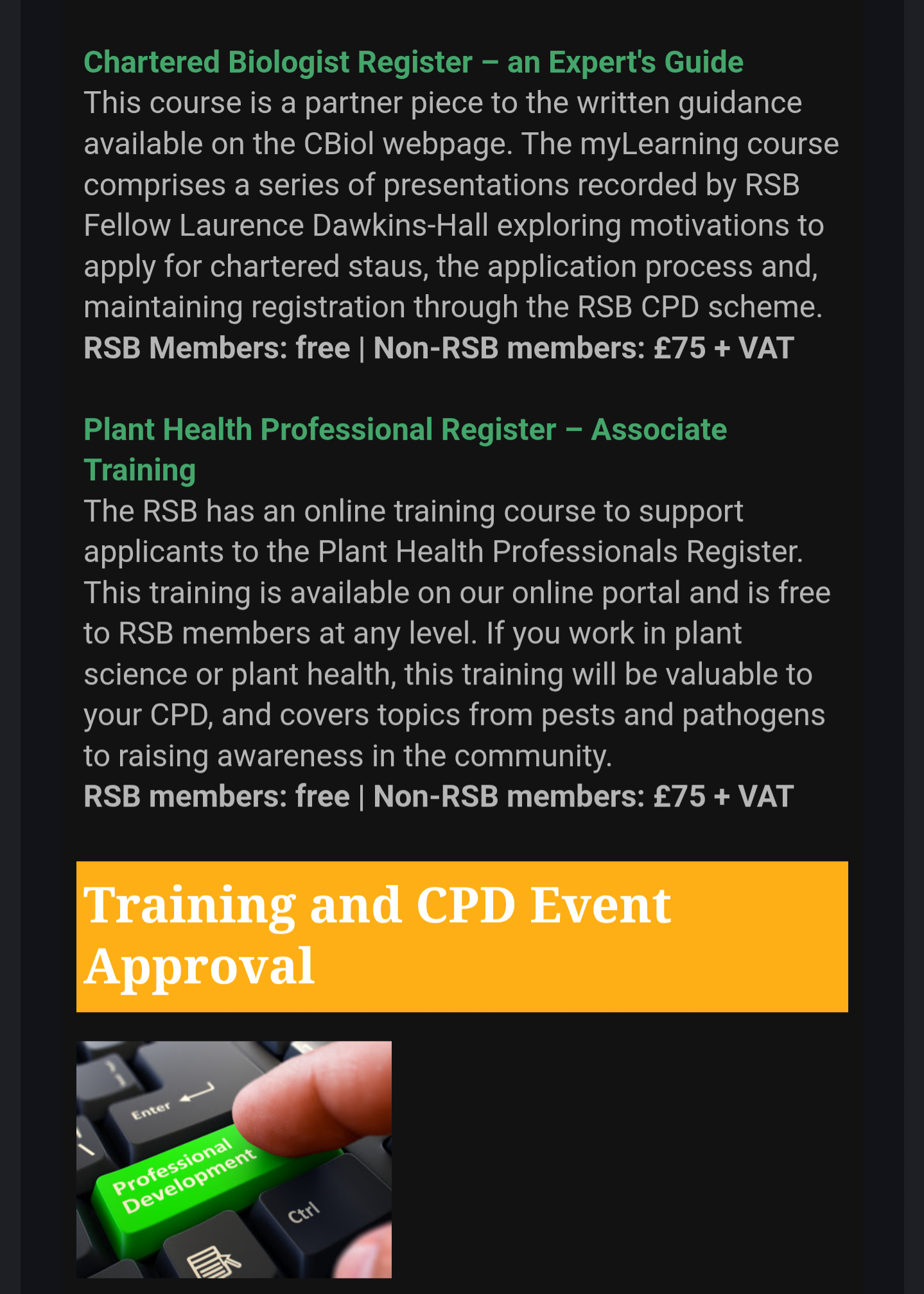
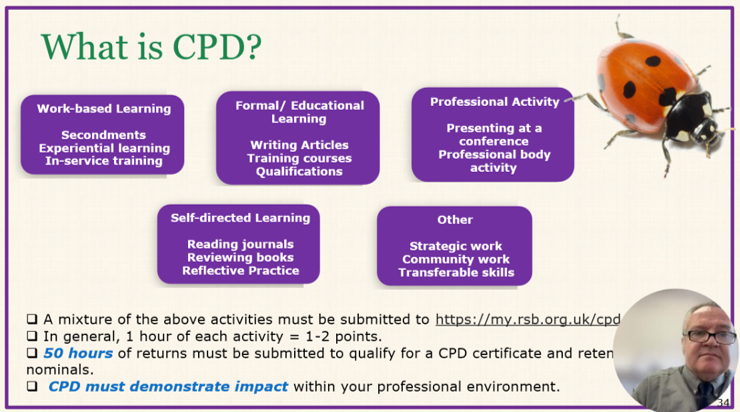
Here are the modules...
Below are the individual modules constituting my online course. If you go to the online course in "Mylearning" materials on the RSB web site, it is possible to generate a power point summary of the contents narrated in individual modules. This is also provided on a page on my (older) weebly web site, a link to which is provided at the bottom of this page.
Create Your Own Website With Webador